
Taylor County Parole or Probation
Parole and probation can both place rules on a person in the community, but they begin in different ways. The independent West Virginia Parole Board decides whether an eligible state prisoner may leave confinement on parole. WVDCR Parole Services then provides field supervision. A Taylor County court imposes probation as part of its sentence, and Judiciary probation staff administer that order. Neither label proves that the person has finished the sentence.
A person released on parole remains under community supervision until discharge or another lawful end to the term. A probationer follows the Taylor County court order and any later modification, revocation, or discharge order. Community Corrections may supervise a bond, pretrial, or alternative-sentence placement, but that role is distinct from both parole and court probation. Keep the source labels intact.
| Issue | Parole | Probation |
|---|---|---|
| Authority | West Virginia Parole Board decision | Taylor County court order |
| Field supervision | WVDCR Parole Services | West Virginia Judiciary probation staff |
| Primary proof | Board action, WVDCR status, and discharge record | Sentencing, supervision, and discharge orders |
| How it ends | Discharge, expiration, revocation, or other Board action | Court discharge, expiration, revocation, or modification |
- Parole
- Conditional release from prison followed by state field supervision.
- Probation
- A court-ordered community sentence or condition administered through the Judiciary.
- Discharge
- The formal end of the supervision term shown by the responsible agency or court.
- Absconder
- A supervision status based on unknown whereabouts and agency action, not a guess drawn from a missing web result.
Verify Taylor County Post-Release Supervision
Start with the record that created supervision. For parole, that means a Board decision or WVDCR release status. For probation, use the Taylor County sentencing or probation order. A name alone is not enough. Compare the date of birth, OID when available, case number, court, and sentence dates before contacting an office.
- Determine whether the person left a regional jail, a WVDCR prison such as Pruntytown, or a different custody system.
- For parole, obtain the Board action and check WVDCR status. For probation, request the sentencing and later supervision orders from the proper Taylor County clerk.
- Contact Parole Services or Taylor probation and ask which public record can confirm current supervision. Staff may limit person-specific details.
- Check for later revocation, modification, or discharge documents. Record the date and source of each response.
- Resolve conflicts through the originating agency. Do not treat absence from an online locator as proof that supervision ended.
For the broader custody and release-record chain, the Taylor County released inmate search explains how WVDCR, courts, VINE, and facility records fit together.
Taylor County Parole Office Assignment
Taylor County lies in WVDCR Parole Services Northern District, Region 6. The official directory is unusually important because two offices publish broad coverage that includes Taylor. The Clarksburg Parole Office and the Elkins Parole Office both list Taylor within their coverage. The public pages do not assign a named person to one office. Call and confirm the assignment instead of choosing the closer city.
The official Region 6 organization page shows the county structure. Its visual record helps explain why a Taylor County parole inquiry may route outside Grafton.
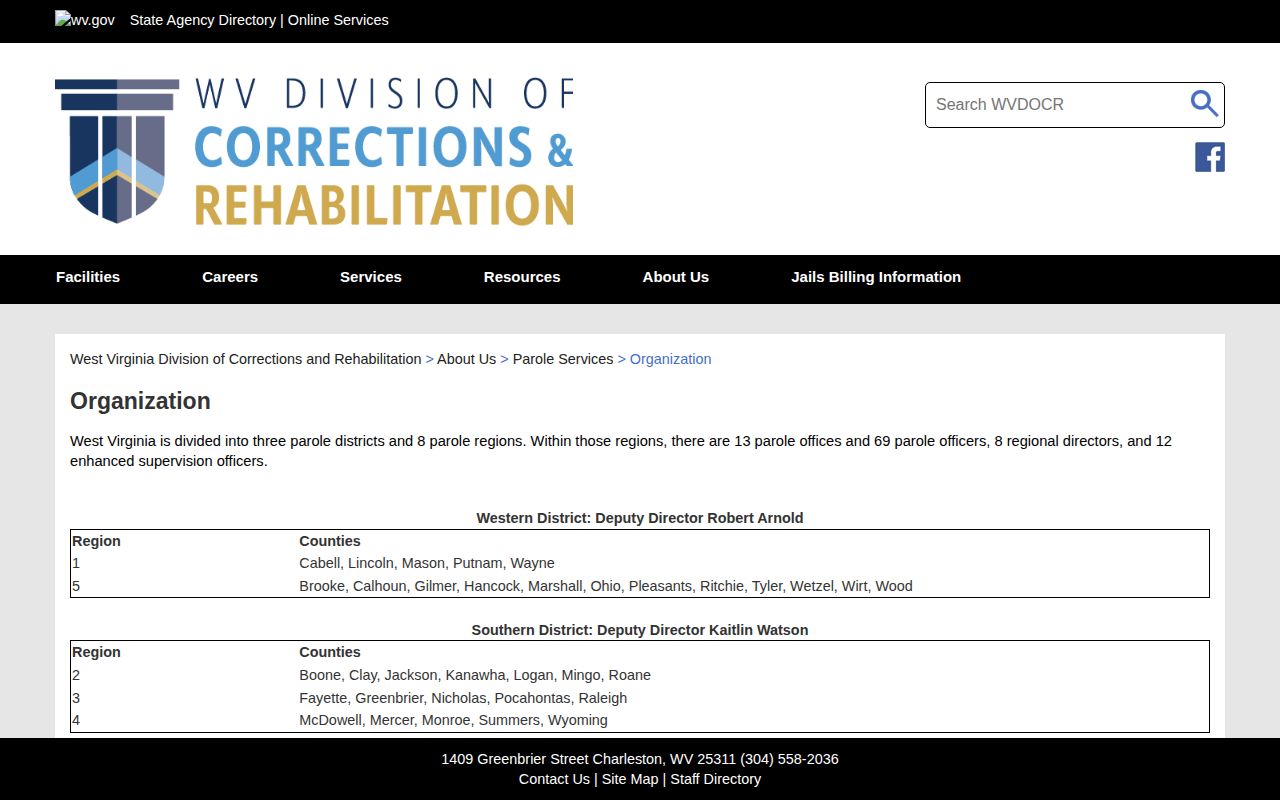
The region listing confirms the service area, but the office must still confirm which field unit holds the individual case.
WVDCR Parole Services Offices
Clarksburg:
215 West Main Street
Clarksburg, WV 26301
304-627-2308
Elkins:
1513 Harrison Avenue, Unit 27
Elkins, WV 26241
304-637-0379
Note: Ask which office is assigned before sending documents or appearing in person, because both published coverage lists include Taylor County.
Taylor County Parole Reporting
WVDCR’s Reentry Planner states that a newly released parolee ordinarily goes directly to the approved release plan and reports to the parole officer within 24 hours or the next business day unless instructed otherwise. That guidance describes the expected first contact, not a public appointment schedule. The approved plan and officer’s directions control the actual reporting step.
Failure to report should not be labeled an absconder event by a third party. The planner describes an operational concern involving unknown whereabouts for at least 72 hours, active attempts to locate the person, and credible information, followed by warrant or revocation processes. Only the responsible agency and official record can establish that status. An old locator result, missed call, or rumor cannot.
The official Elkins office page supplies one of the published Taylor County routes.
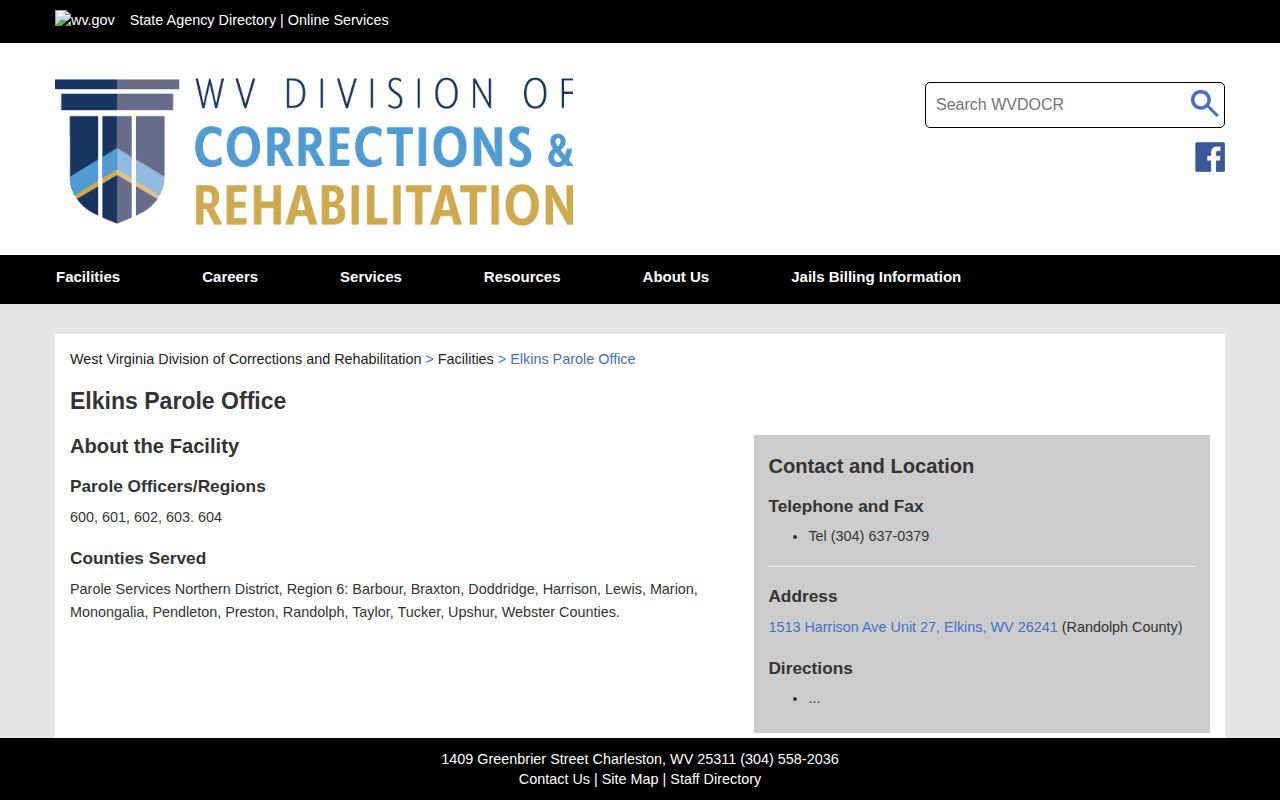
This office page is a contact path, not a public roster of Taylor County parolees.
Taylor County Parole Board Records
When a public record is needed, separate the request by agency. Ask the Parole Board for a releasable decision, rescission, revocation, or discharge record. Ask WVDCR for custody release and field-supervision records it holds. Board Rule 92-1-10 provides a route for an inmate, parolee, or representative to seek publicly disclosable records within its scope. A request for hearing audio follows a different procedure and should not be treated as a substitute for the written decision.
The hearing calendar also has limits. A parole-eligibility date means the person may be considered, while an interview date marks the hearing process. A denial leaves the person incarcerated for a later review. A “set-up” schedules another hearing after added time. A grant still requires completion of the stated conditions before actual release. These terms should be copied exactly from the Board record so that a calendar entry is not mistaken for Taylor County community supervision.
Taylor County Probation Records
Taylor probation belongs to the 23rd Judicial Circuit with Barbour County. Verification begins with the sentencing or probation order, then any later filing that changes or ends the term. The official Taylor court page lists the probation office in the Courthouse Annex. Staff can explain the public-record route, although they may not disclose all person-specific supervision details by phone.
Taylor County Probation
Chief Probation Officer Heather L. Squires
Taylor County Courthouse Annex
214 West Main Street, Room 206
Grafton, WV 26354
304-265-5135
Fax: 304-265-0714
The Taylor County court directory is the source for the office and circuit listing.
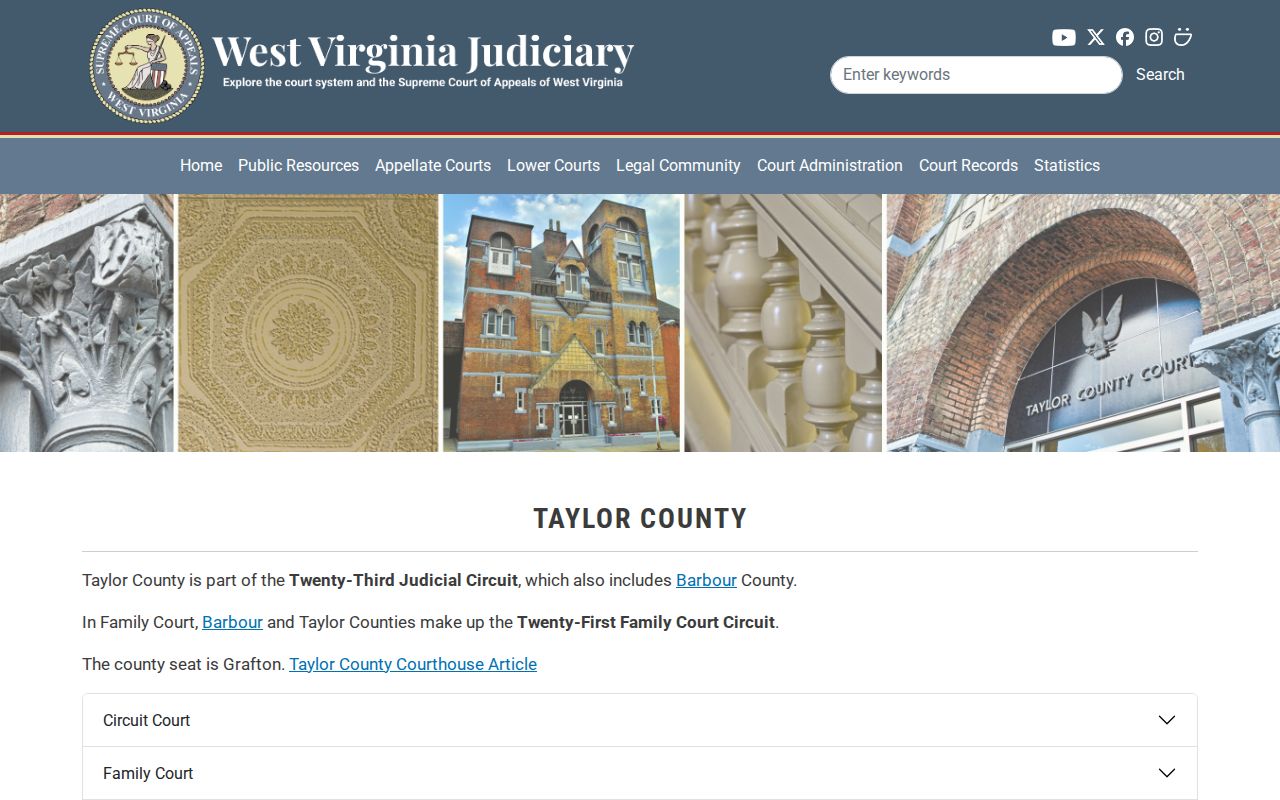
The court directory helps route a request, while the filed order supplies the legal terms and dates.
Taylor County Community Corrections
Barbour County Community Corrections serves the Barbour and Taylor circuit region from Philippi. Its official program describes day reporting, bond and pretrial supervision, alternative-sentence control, monitoring, classes, and service referrals. These can be important after a Taylor County court order, but participation is not parole and does not prove that a prison sentence or supervision term has ended.
Use the court order to identify the program and duties. Then use the program contact for authorized scheduling or record questions. A program completion document may help trace one part of a case, while final discharge still comes from the court or other authority that imposed supervision.
The Barbour-Taylor Community Corrections page shows the local services and contact route.
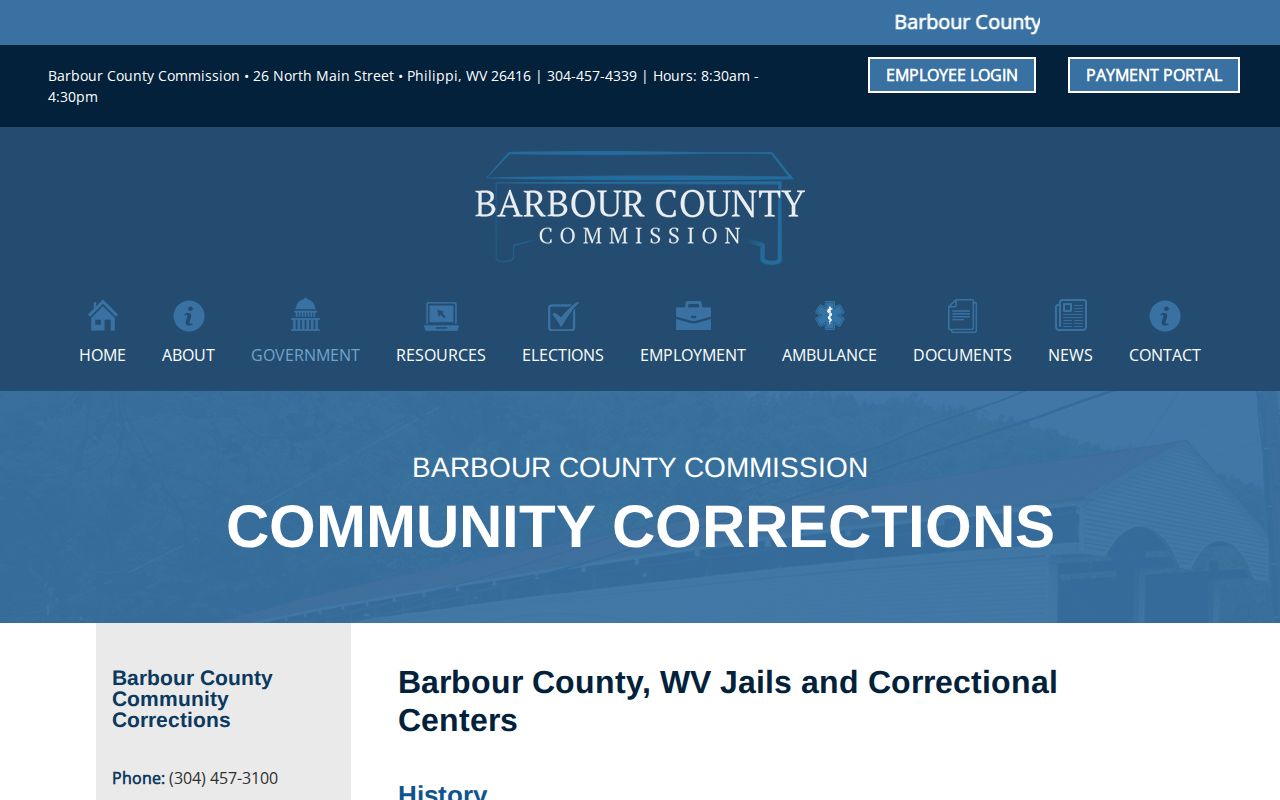
The program is a local court and community-corrections layer, separate from WVDCR Parole Services.
Barbour County Community Corrections
85 Court Street
Philippi, WV
304-457-3100
304-457-3483
304-457-4715
Taylor County Supervision Violations
A possible violation does not automatically establish revocation. Parole violations are handled through WVDCR and Parole Board processes. Probation issues return to the Taylor County court. Community Corrections reports within its court-defined role. A warrant, revocation decision, or amended order is stronger evidence than an informal claim.
VINE may provide a movement, hearing, or discharge notification when the source record supports it, but it is not a certified supervision history. Save the event language and agency name, then obtain the underlying order. A new detainer can also cause one custody term to end while another hold begins.
West Virginia also maintains two notice layers. Ordinary VINE registration can provide available status events from the participating source. A statutory written request for release or parole-hearing notice is different. WVDCR instructs eligible requesters under state law to send the written request to both WVDCR and the independent Parole Board because the two agencies perform different roles. A written request to WVDCR also registers the victim in VINE under its published procedure. Portal registration alone should not be assumed to replace that formal written route.
Note: A transfer, warrant, or revocation can change the person’s location without proving that the original supervision term has been discharged.
Taylor County Supervision Discharge
Final verification requires the end record. For parole, seek a WVDCR or Board discharge action. West Virginia law permits an early-discharge process after at least one year of successful parole in qualifying cases, while life-sentence rules differ. Eligibility for that process is not the discharge itself. Obtain the dated action.
For probation, request the Taylor County order that closes, discharges, extends, modifies, or revokes the term. Keep prison release and supervision discharge as separate dates. A person can be outside prison yet still on parole, or outside jail under probation or another court program.
When the public record is not online, write to the agency that created it. Identify the person with more than a name, state the type of supervision, give the case or OID if known, and request the existing discharge action. A narrow request is easier to route than a demand for the entire institutional file. Ask the office to redact exempt material and provide the releasable remainder. Taylor County court copies come through the clerk process, while WVDCR and Board records follow their own public-record procedures.
A clean Taylor County record trail names the authority, the type of supervision, the office, the start date, any change, and the final discharge date. This approach avoids turning a current-status query into an unsupported conclusion about the entire sentence.